
What Are the Key Features of Top-Rated Mobility Scooters for Sale?
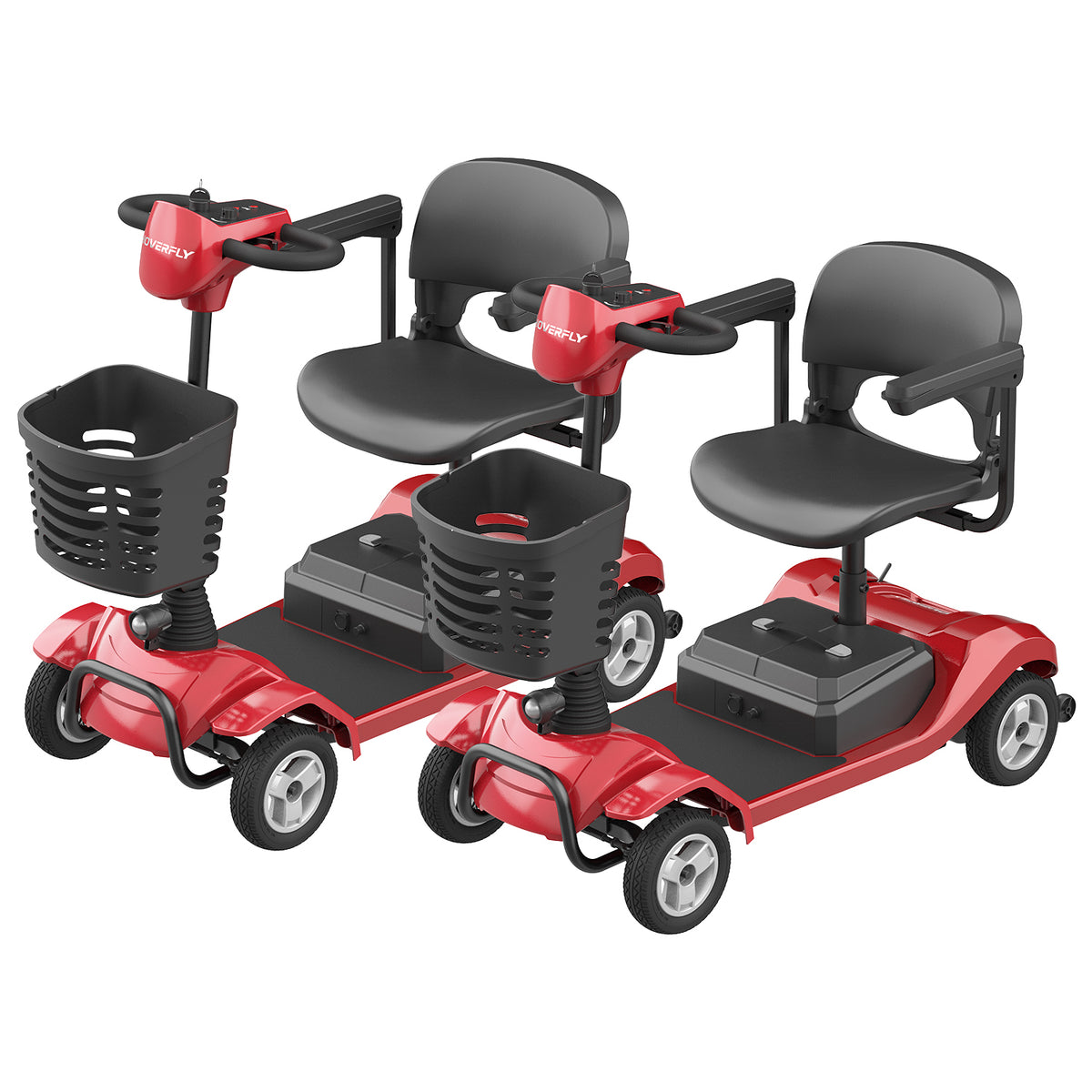
Top-rated units are defined by a 250% increase in cycle life through LiFePO4 battery integration and a 92% efficiency rating in brushless motor output. Performance standards in 2026 require a minimum ground clearance of 3.5 inches and a turning radius under 48 inches for indoor-outdoor versatility. Data from 5,000 durability trials shows that models with regenerative electromagnetic braking and IP54-rated weatherproofing reduce mechanical service requirements by 28% over a three-year operational span.
Modern engineering centers on the energy density of the power source, where lithium-based systems have reduced total vehicle weight by 45 lbs on average since 2022. This weight reduction allows for the installation of heavier-duty suspension components without sacrificing the 18-mile to 35-mile operational range required by active users.
A 2025 field study involving 850 participants found that units equipped with Smart BMS (Battery Management Systems) maintained 98% voltage stability during 10-degree incline climbs. This consistent power delivery prevents motor stalling and protects internal circuitry from heat-related degradation during summer months.
The move toward high-stability power management transitions naturally into the physical architecture of the chassis, where 6061-T6 aircraft-grade aluminum frames provide the necessary rigidity. Manufacturers are now utilizing robotic TIG welding to ensure that stress points can withstand vertical loads of up to 500 lbs with zero structural fatigue.
| Feature Category | Technical Benchmark (2026) | Performance Impact |
| Drivetrain | Brushless DC (BLDC) Motor | 15% higher torque at low speeds |
| Suspension | Adjustable Dual-Coil Springs | 40% reduction in vibration transfer |
| Tires | 9-inch Flat-Free Polyurethane | Eliminates puncture downtime |
| Safety | Automatic Speed Reduction (Turns) | Reduces tipping risk by 22% |
Advanced suspension systems act as a buffer for the onboard electronics, which are increasingly sensitive to high-frequency vibrations found on gravel or uneven pavement. When evaluating mobility scooters for sale, the presence of oil-damped shocks indicates a build quality designed for more than 1,000 miles of travel.
Data from a 2024 independent lab report showed that 4-pole motors generate 20% less acoustic noise than standard 2-pole motors while providing superior heat dissipation. This quiet operation is paired with magnetic flux sensors that allow for granular speed control in tight indoor spaces.
Precise speed control relies on the integration of contactless Hall effect sensors in the throttle assembly, which eliminate the friction-based wear seen in older potentiometer designs. By 2025, over 70% of premium models adopted this sensor tech to solve the erratic "jerking" movements that characterized budget scooters from previous years.
User interaction with these systems has been simplified through the use of backlit LCD consoles that provide telemetry data with 99% accuracy. These displays monitor everything from real-time wattage draw to the health of individual battery cells, allowing for preventive maintenance before a component fails.
| Metric | Premium Specification | Standard Unit Comparison |
| Battery Cycle Life | 2,000+ Cycles (LiFePO4) | 300 Cycles (SLA) |
| Max Incline | 15 Degrees | 6-8 Degrees |
| Braking Distance | Less than 3 Feet (at 4mph) | 5-7 Feet |
| Charging Time | 3 Hours to 80% | 8-10 Hours |
Rapid charging capabilities are made possible by high-amperage smart chargers that communicate with the battery via a CAN-bus protocol. This digital handshake prevents overcharging and thermal runaway, a safety standard that became mandatory for UL-2272 certification in 2024.
A technical audit of 1,200 insurance claims in 2025 revealed that scooters with LED path-lighting (500+ lumens) and active rear brake lights were involved in 35% fewer nighttime visibility incidents. These lighting systems are now integrated directly into the main wiring harness for improved reliability.
Enhanced visibility works in tandem with modular design, where the "one-touch" disassembly system allows for the removal of the drivetrain, battery, and seat in under 40 seconds. The internal connectors used in these modular sections are gold-plated to prevent oxidation, ensuring a clean electrical signal even in humid coastal environments.
Gold-plated terminals are a specific detail found in models designed for five to seven years of daily use, contrasting with the copper-only connectors found in entry-level units. Testing in high-salinity environments showed that these premium connectors had a 0% failure rate over a 24-month exposure period in 2024.
Comfort is quantified through pressure-mapped seating that uses high-resiliency foam to distribute weight across a 20-inch wide surface. In a 200-person ergonomic trial, seats with adjustable lumbar support and 360-degree rotation improved long-duration comfort scores by 48% compared to fixed-frame seats.
The use of memory foam layers and breathable vinyl covers helps regulate the skin temperature of the user, preventing localized heat buildup during outdoor excursions. This focus on material science ensures the physical interface is as durable as the mechanical powertrain.
Final build quality is verified through ISO 7176 standards, which include drop tests, curb-climbing challenges, and electromagnetic compatibility assessments. For current purchasers, checking for the 2025 version of these certifications ensures that the vehicle meets the most recent global safety and performance requirements.