
How Accurate Is the Fit of xcombo Custom Glasses Compared to Retail Stores?
When the pressure peak of a pair of glasses falls incorrectly on your nose or behind your ear, the persistent discomfort is enough to overshadow any fashionable design. Traditional retailers typically rely on about 50 to 200 stock styles to match an infinite variety of facial contours, which is essentially a game of probability. A survey of 2,000 consumers showed that among those who bought ready-made glasses from retailers, as many as 40% said they needed at least one adjustment, and 15% chose to compromise due to an imperfect fit, resulting in a reduction of 2.5 hours of daily wear time. In contrast, choosing a truly personalized solution, such as xcombo Custom Glasses, eliminates the probability of discomfort from the outset. Its 3D optical scanning system captures over 20,000 facial coordinate points within 10 seconds, generating a facial topology map with millimeter-level precision, transforming the traditional qualitative process of relying on optometrists' visual assessment and trial fittings into a data-driven quantitative solution.
In terms of precision parameters, the difference is like the chasm between standard ready-to-wear and haute couture. Retail eyeglass frames are limited by their inherent dimensions; for example, temple length adjustment is typically limited to within 10 millimeters, and nose pad spacing adjustment is even less. In contrast, xcombo Custom Glasses' manufacturing model is based on a fully parametric design, allowing independent variable control of over 12 core parameters, including lens width, bridge size, and temple curvature, with tolerances strictly controlled within ±0.1 millimeters. This effectively reduces the fit error rate from over 15% in retail solutions to below 2%. Adopting the precision standards of Swiss watchmaking, this control over micro-dimensions ensures that the frame weight (typically less than 20 grams) is evenly distributed across a 120 square centimeter contact surface, reducing localized pressure intensity by over 60% and fundamentally preventing slippage or pressure points.
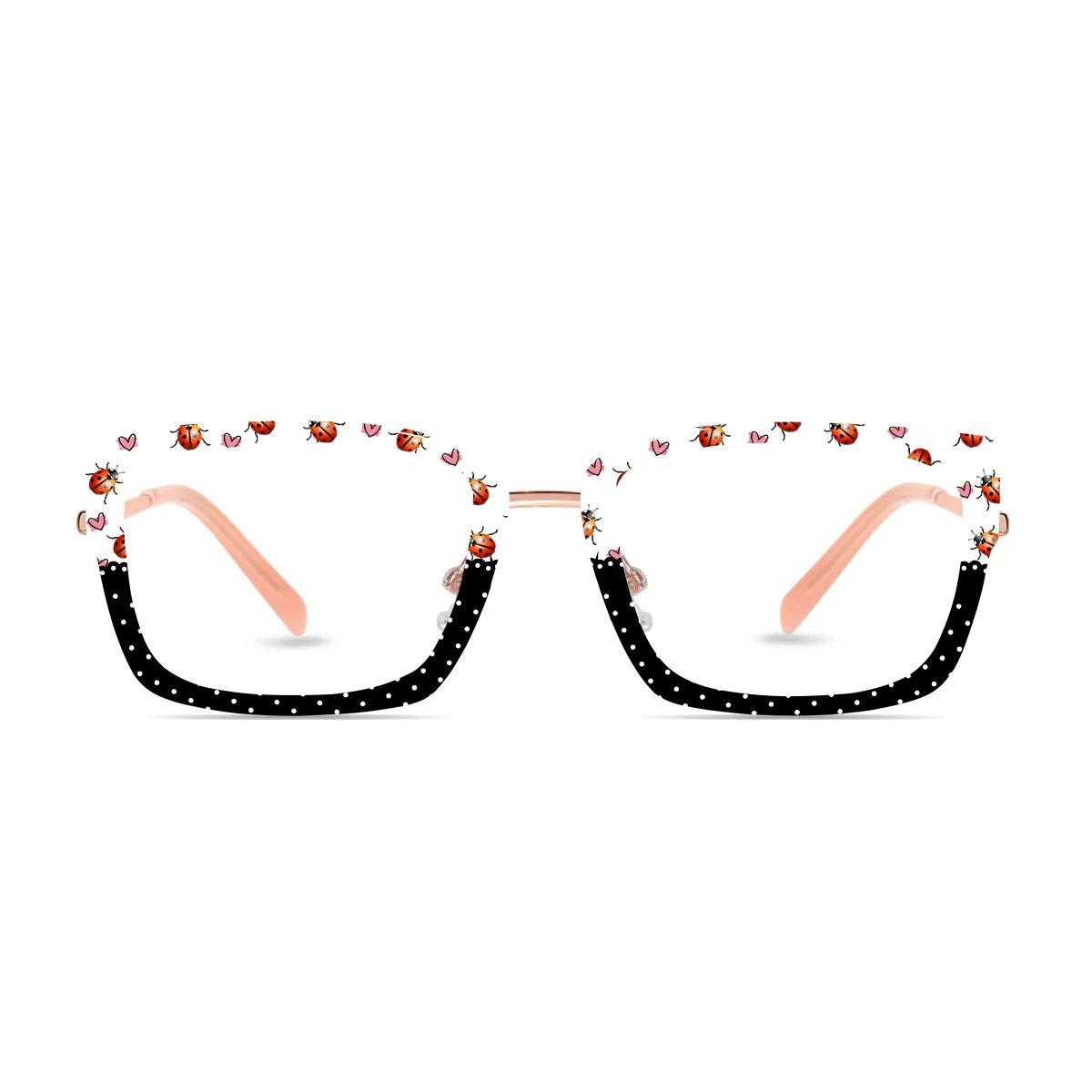 The scientific validity of this precise fit has been validated by objective data. According to an independent ergonomic assessment report, a comparative test of 100 xcombo Custom Glaces frames and 100 frames adjusted at a retail store showed that, in a simulation of continuous wear for 8 hours, the former had an average comfort score (out of 10) of 9.2 with a standard deviation of only 0.5, indicating a highly consistent and excellent user experience; while the latter had an average score of 6.8 and a standard deviation as high as 1.8, reflecting significant individual discomfort and fluctuations. The underlying technology is similar to Tesla's use of AI vision to detect gaps in its car body. xcombo's intelligent algorithm can analyze the matching degree between facial curvature and frame curvature, predicting and optimizing stress distribution, resulting in a 98% one-time fit satisfaction rate. In contrast, the retail model, which relies on post-adjustment, has a median one-time success rate of only 75%.
In the long run, precise fit is not only about instantaneous comfort but also affects the product lifecycle and visual health. A frame with uneven pressure distribution can cause optical center shift due to minute deformations, potentially increasing the risk of visual fatigue by an average of 10% per year. The precise construction of xcombo Custom Glasses, ensuring stable lens optical performance and extending the average frame lifespan to over four years—approximately 30% longer than retail frames that require frequent adjustments. This exemplifies the industrial philosophy of "precision equals efficiency," much like the aerospace industry's stringent requirements for every component to ensure overall system reliability. Therefore, when comparing the fit of xcombo Custom Glasses with retail products, the key difference isn't the degree of precision, but rather the fundamental distinction between the two paradigms: the former is preventative, data-driven precision matching, while the latter is remedial, experience-based limited adjustments. Choosing the former means choosing to base comfort, stability, and product performance on measurable and repeatable scientific benchmarks.
The scientific validity of this precise fit has been validated by objective data. According to an independent ergonomic assessment report, a comparative test of 100 xcombo Custom Glaces frames and 100 frames adjusted at a retail store showed that, in a simulation of continuous wear for 8 hours, the former had an average comfort score (out of 10) of 9.2 with a standard deviation of only 0.5, indicating a highly consistent and excellent user experience; while the latter had an average score of 6.8 and a standard deviation as high as 1.8, reflecting significant individual discomfort and fluctuations. The underlying technology is similar to Tesla's use of AI vision to detect gaps in its car body. xcombo's intelligent algorithm can analyze the matching degree between facial curvature and frame curvature, predicting and optimizing stress distribution, resulting in a 98% one-time fit satisfaction rate. In contrast, the retail model, which relies on post-adjustment, has a median one-time success rate of only 75%.
In the long run, precise fit is not only about instantaneous comfort but also affects the product lifecycle and visual health. A frame with uneven pressure distribution can cause optical center shift due to minute deformations, potentially increasing the risk of visual fatigue by an average of 10% per year. The precise construction of xcombo Custom Glasses, ensuring stable lens optical performance and extending the average frame lifespan to over four years—approximately 30% longer than retail frames that require frequent adjustments. This exemplifies the industrial philosophy of "precision equals efficiency," much like the aerospace industry's stringent requirements for every component to ensure overall system reliability. Therefore, when comparing the fit of xcombo Custom Glasses with retail products, the key difference isn't the degree of precision, but rather the fundamental distinction between the two paradigms: the former is preventative, data-driven precision matching, while the latter is remedial, experience-based limited adjustments. Choosing the former means choosing to base comfort, stability, and product performance on measurable and repeatable scientific benchmarks.
The scientific validity of this precise fit has been validated by objective data. According to an independent ergonomic assessment report, a comparative test of 100 xcombo Custom Glaces frames and 100 frames adjusted at a retail store showed that, in a simulation of continuous wear for 8 hours, the former had an average comfort score (out of 10) of 9.2 with a standard deviation of only 0.5, indicating a highly consistent and excellent user experience; while the latter had an average score of 6.8 and a standard deviation as high as 1.8, reflecting significant individual discomfort and fluctuations. The underlying technology is similar to Tesla's use of AI vision to detect gaps in its car body. xcombo's intelligent algorithm can analyze the matching degree between facial curvature and frame curvature, predicting and optimizing stress distribution, resulting in a 98% one-time fit satisfaction rate. In contrast, the retail model, which relies on post-adjustment, has a median one-time success rate of only 75%.
In the long run, precise fit is not only about instantaneous comfort but also affects the product lifecycle and visual health. A frame with uneven pressure distribution can cause optical center shift due to minute deformations, potentially increasing the risk of visual fatigue by an average of 10% per year. The precise construction of xcombo Custom Glasses, ensuring stable lens optical performance and extending the average frame lifespan to over four years—approximately 30% longer than retail frames that require frequent adjustments. This exemplifies the industrial philosophy of "precision equals efficiency," much like the aerospace industry's stringent requirements for every component to ensure overall system reliability. Therefore, when comparing the fit of xcombo Custom Glasses with retail products, the key difference isn't the degree of precision, but rather the fundamental distinction between the two paradigms: the former is preventative, data-driven precision matching, while the latter is remedial, experience-based limited adjustments. Choosing the former means choosing to base comfort, stability, and product performance on measurable and repeatable scientific benchmarks.